
Boerboel Myths,
debunked
The Boerboel attracts more lies than almost any breed I know. Here are the myths I hear most — what’s true, what’s not, and what actually matters before you bring one home.

Some come from people who’ve never owned one. Some come from owners who got the wrong dog from the wrong breeder and blamed the breed. Some come from TikTok clips chasing views. I’ve bred and lived with Boerboels since 2006, raised them around my own kids, and worked with hundreds of families who own them. Here’s the straight answer to the myths I hear most.
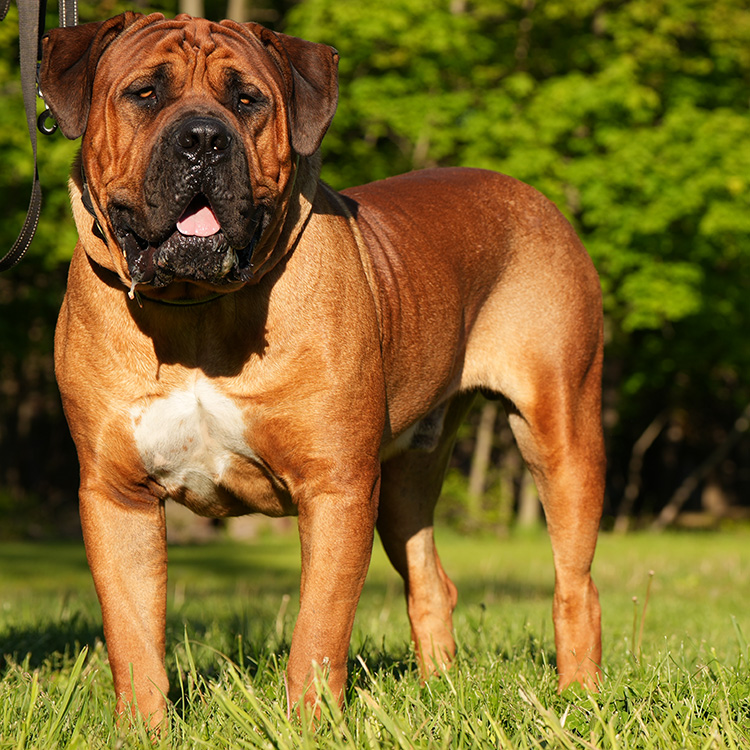
This one’s the loudest, and it’s wrong. Protection is not aggression. A Boerboel reads a situation, decides if it’s a threat, and responds. That’s discernment, not hostility. A genuinely aggressive dog reacts without judgement — to mailmen, to other dogs, to its own family. That’s a sign of bad breeding, bad socialization, or both.
A well-bred, well-raised Boerboel will sleep through the doorbell when a friend rings it — and plant himself between a stranger and my kids the second something feels off. Confidence without volatility. If you meet a Boerboel that’s reactive or unpredictable, you’re not looking at the breed; you’re looking at a breeding mistake or a training failure. See what proper temperament looks like on The Breed page.
In South Africa they call the Boerboel the “nanny dog.” That’s not marketing — it’s how the breed has been used on farms for three hundred years. The dog patrols the perimeter, watches the kids, and comes inside at night to lie on the floor next to them. My own kids grew up with adult Boerboels in the house — big, deliberate dogs, never careless with my children.
The honest caveat — true for any dog over 100 pounds — is supervision. A 150-pound dog doesn’t have to mean harm to knock a toddler down. Teach the kid to respect the dog, teach the dog the kid is family, and never leave any large dog and a small child unsupervised. That’s not a Boerboel thing. That’s a big-dog thing.
This one lives on TikTok and won’t die. The number is wrong. There’s no peer-reviewed study measuring Boerboel bite force at 800 PSI. The actual measured range across mastiff-type dogs falls roughly between 250 and 450 PSI. The Kangal, which has been measured, comes in around 700+ — and that’s the breed people are usually thinking of.
But bite force is not a measure of danger. A 300 PSI bite from a calm, well-trained dog is harmless to its family; a 200 PSI bite from a reactive, unsocialized dog is a tragedy waiting. The number that matters is the temperament of the dog and the experience of the owner. If a breeder leads with bite force in their marketing, walk away — they’re selling intimidation, not a dog.

It depends, and it’s harder than the country alternative — but it’s not impossible. A Boerboel doesn’t need 20 acres. What it needs is structured exercise, mental work, and a calm indoor environment. Meet those needs and the dog sleeps most of the day. What an apartment Boerboel needs from its owner:
- A real walk twice a day — 45 minutes minimum, with leash discipline and some sniff time.
- Mental load — training sessions, scent games, structured play. A bored Boerboel finds a problem to solve.
- Climate control — they overheat fast. Hot July pavement is not Boerboel-friendly.
- A landlord and HOA who will tolerate a 150-pound dog of restricted-breed reputation (see Myth #6).
Country dog by design, urban dog with enough commitment. I’d rather see a Boerboel in a Cleveland apartment with a serious owner than on a farm with someone who ignores it.
No. They’re related — all mastiff-family guardian breeds — but they’re different dogs with different jobs.
- Bullmastiff — bred to track and pin poachers without biting. More reserved, less drive, heavier head.
- Cane Corso — bred as a hunting and property dog in Italy. More agile, more nervy, higher-energy.
- Presa Canario — bred for catch work on cattle. A hard dog, often more dog-aggressive than the Boerboel.
- Boerboel — bred for farm guardianship over four centuries. Built for sustained patrol, family integration, and decision-making.
If a “Boerboel” looks like any of the above, ask for pedigree papers and registration with SABBS, EBBASA, NABBA, AKC, or NKC — they’re commonly faked because the price tag is high. I broke down the comparison on Bullmastiffs vs African Boerboels and in our blog.
Boerboels are legal across the United States at the federal level, and the breed is recognized by the AKC, NKC, and UKC. What is true:
- A small number of countries restrict or ban the breed under breed-specific legislation (Denmark, France, Romania, Singapore, and others, varying by year).
- A small number of US municipalities and HOAs maintain restricted-breed lists that include the Boerboel.
- Some homeowner’s insurance carriers charge more or refuse to cover certain “powerful breeds.” Check your policy before you commit.
If you’re in the US and being told you “can’t own one,” that’s almost always a local rule — HOA, landlord, or insurance — not the law. Read your lease. Read your HOA covenants. Call your insurer.
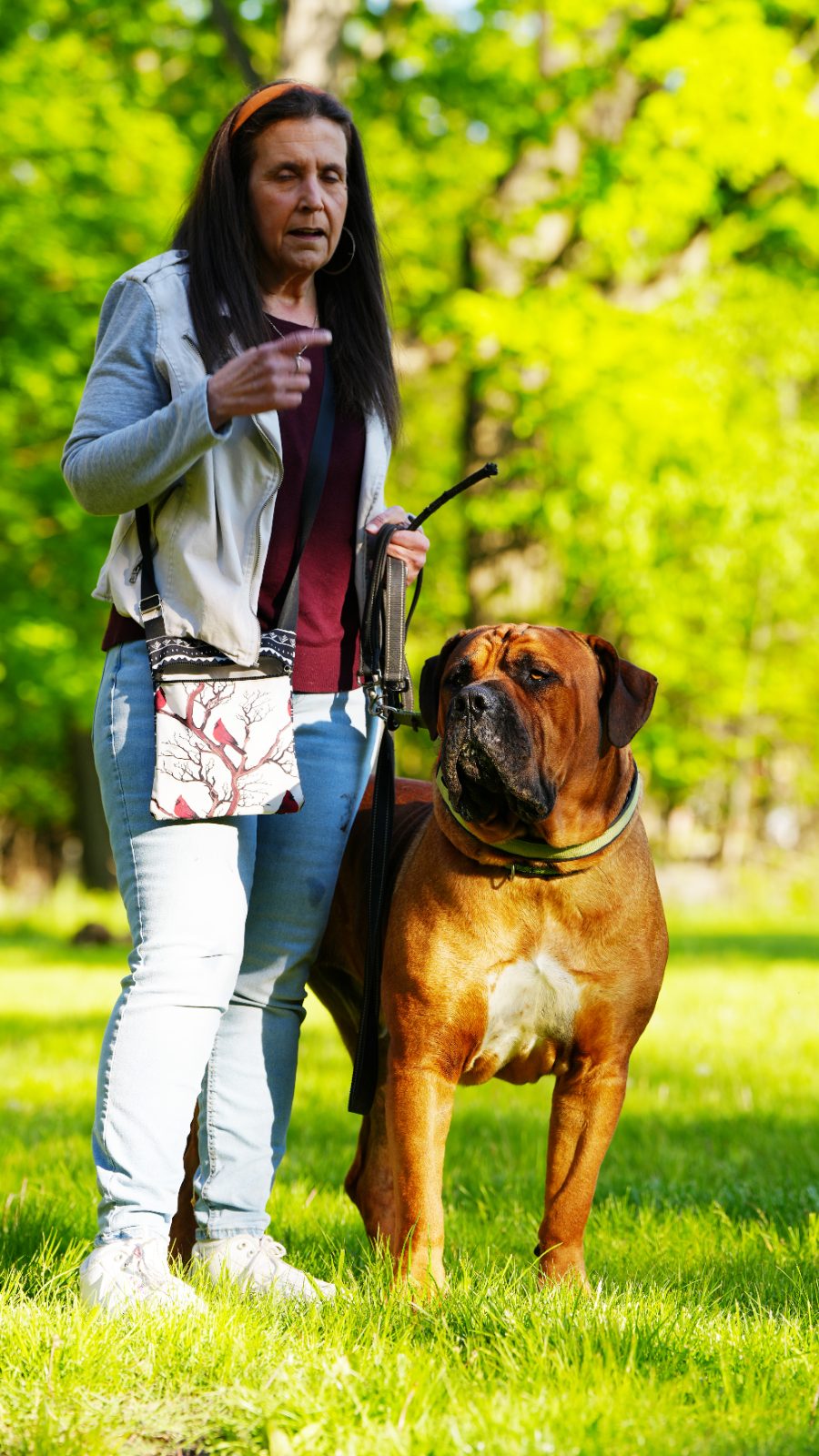
A Boerboel is one of the smartest mastiff-family dogs you’ll work with — and that’s the thing people mistake for “untrainable.” The breed wants leadership it can respect. It won’t respond to fear, inconsistency, or a handler trying to dominate it physically. It will respond to calm, clear, consistent commands rewarded with real value.
- Start early — 8-week-old puppy training, not 8-month-old “now I have a problem” training.
- Consistent rules — off the couch means off the couch, not “off the couch when guests are here.”
- Real obedience training, ideally with a trainer who’s worked mastiff-family breeds.
- Socialize on purpose — take the puppy to 100 new environments before 16 weeks.
The breed isn’t untrainable. It’s unforgiving of inconsistent owners. There’s a difference.
This one’s going to lose me readers, but it has to be said. The breed standard caps males around 28 inches at the shoulder and roughly 175 pounds. Anything over that is outside standard. Most of what gets marketed as “XL” or “Giant” online is one of three things:
- A Boerboel crossed with a heavier mastiff to push size up — at the cost of athleticism, working ability, and lifespan.
- A pure but oversized dog selected for bulk over function — often with joint problems and shorter lifespans.
- A photoshopped or perspective-warped Instagram picture.
A 150-pound Boerboel that can still move, work, and live to 10–12 years is what you want. A 200-pound dog gassed walking up the porch is not a status symbol — it’s a welfare problem. More on the standard on The Breed page.
The single biggest mistake first-time buyers make. The bloodline you pick matters more than almost any other choice you’ll make about the dog. Within the breed there are working lines, show lines, oversized lines, and a growing number of inbred lines pushed too hard by popular-sire syndrome — too many puppies from too few studs, stacking up health and temperament problems. I cover this on Health & Genetics. Two questions to ask any breeder:
- “What’s the COI on this litter, and how do you manage it across your program?” If they don’t know what you’re asking, they’re producing puppies, not running a program.
- “Can I see OFA, PennHIP, or equivalent hip and elbow scores on both parents, plus cardiac clearances?” Anything short of paperwork is a no.
Pick the breeder, not the puppy. The breeder picks the puppy for you.
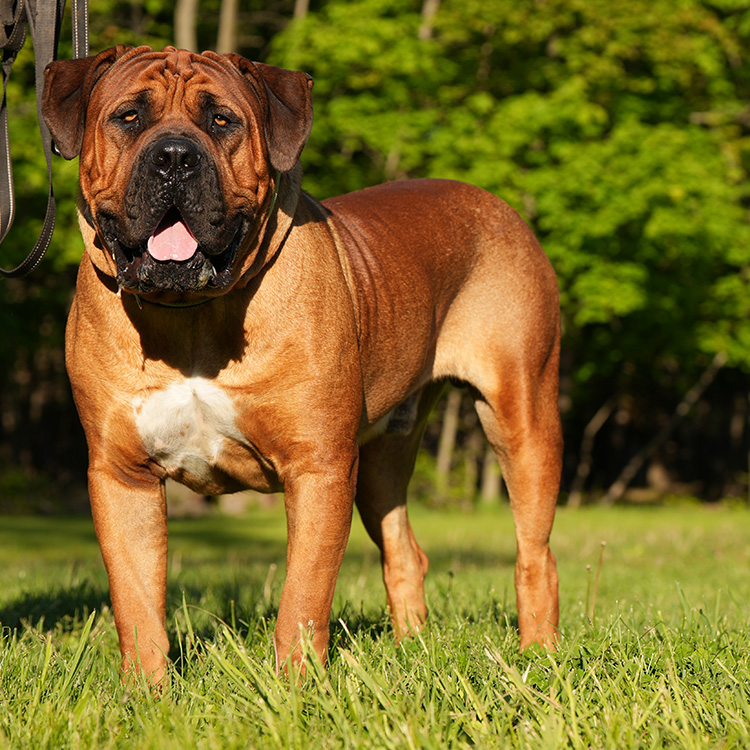
Half-true, with caveats. Like most guardian breeds, Boerboels can show same-sex aggression, especially intact adults — two males, or two intact females, in one household can be a problem. But a Boerboel raised from puppyhood with cats, livestock, smaller dogs, or an opposite-sex Boerboel generally integrates fine. Mine have lived alongside other dogs, chickens, and barn cats without incident.
- Choose opposite-sex pairings if you want two Boerboels.
- Socialize early with whatever animals will share the home.
- Spay/neuter on veterinary timing — too early hurts joint development in large breeds.
- Don’t add a second guardian-breed dog as an adult.
The breed isn’t a wrecking ball. It just needs to be set up to win.
The vast majority of Boerboels are not high prey or play drive. They don’t have the ball obsession of a Border Collie or the prey intensity of a Malinois. What they carry instead is defensive drive — the instinct to protect territory, possessions, and pack. Buy a Boerboel expecting a sport-dog motor and you’ll be surprised; that’s simply not what this breed was built for.
Neither. The defensive instinct is innate, but a balanced, reliable dog is built through leadership, socialization, and conditioning. No puppy arrives pre-programmed as a protector — or as a problem. What you reward and how you lead shapes the dog far more than its DNA alone.
A yard is not a substitute for leadership. This is a powerful, intelligent, pack-oriented dog that needs structure, exercise, and a clear leader — not just acreage. Owners who provide land but no leadership end up with a dog making its own rules. Space is nice; guidance is essential.
The bottom lineJudge the dog, not the rumor
Twenty years in this breed has taught me one thing — almost every “bad Boerboel” story traces back to either a bad breeder cutting corners or an owner who took on more dog than they were ready for. The breed isn’t dangerous. It’s serious. There’s a difference, and that difference matters. A Boerboel from a responsible program, in the hands of a committed owner, is one of the most loyal, level-headed, and capable dogs you’ll ever live with.
The Boerboel isn’t dangerous. The Boerboel is honest — it gives back exactly the leadership it’s given.
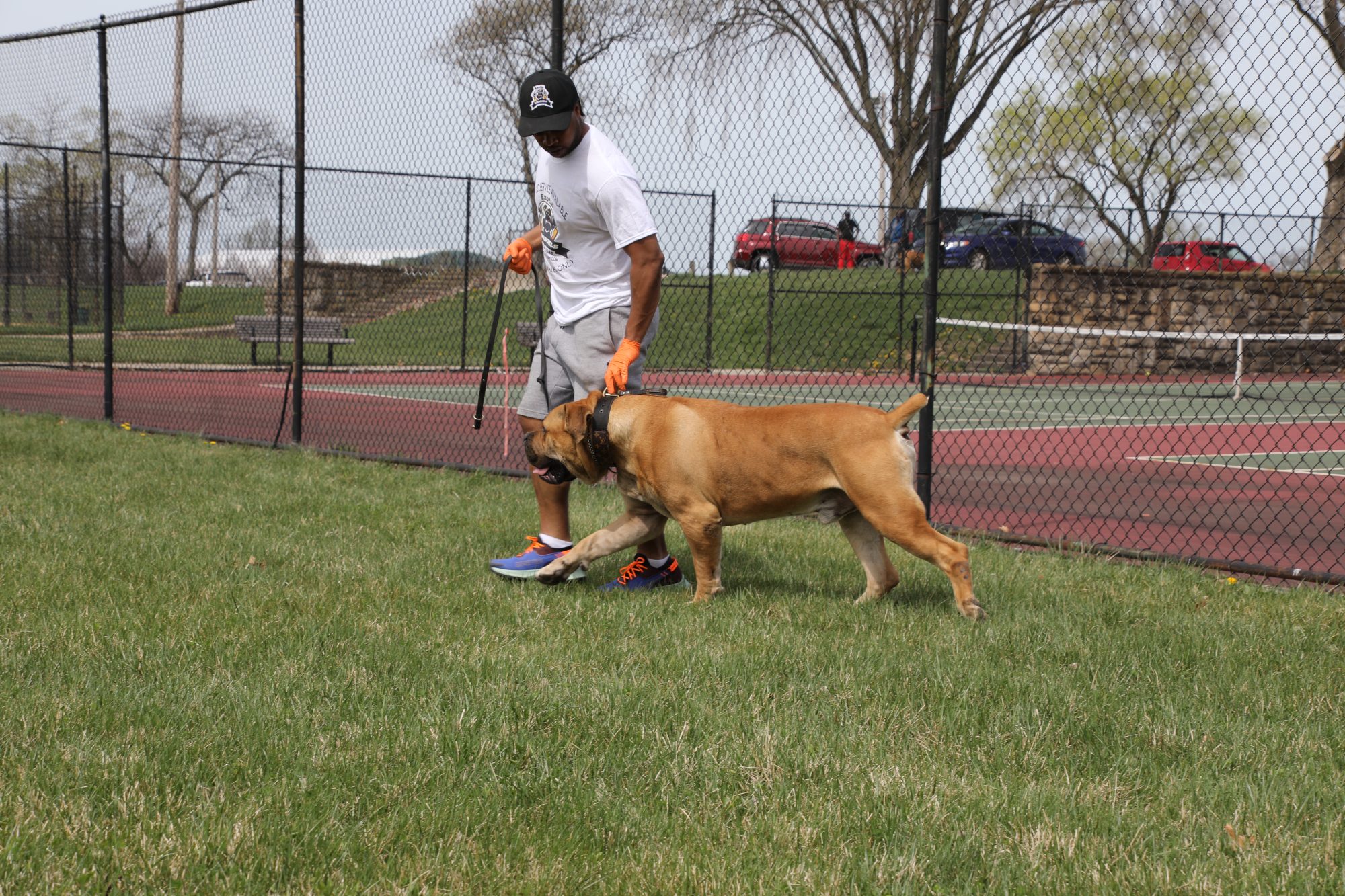
Meet the real breed
not the rumor
The best way to debunk a myth is to meet a great dog. Come see what a balanced, well-led Boerboel actually looks like — and ask us anything.