
Mistakes
to avoid
The costly lessons you don’t have to learn the hard way — from the whelping box to the living room. Some are made by breeders chasing the wrong goals. Most are made by good owners, unknowingly, every single day.

Most of the damage done to a Boerboel doesn’t come from cruelty. It comes from good intentions applied the wrong way — by breeders who chase a number on a scale, and by loving owners who treat a guardian dog like a small human in a fur coat. None of it is malicious. All of it is avoidable.
We’ve been at this since 2006. We’ve seen the mistakes play out, watched programs collapse, watched people invest heavily in dogs that were never going to produce what they hoped because the foundation was wrong from the start. The first three below are for anyone breeding this dog. The rest are for everyone who lives with one.
Breeder mistake 01Breeding for extremes
The single most common breeding mistake in the modern Boerboel world is chasing size for its own sake. In America especially, we equate bigger with better, with more value, with status. So breeders push mass, bone, and bulk past the point of function.
A Boerboel that can’t breathe, can’t run, and can’t move is not an improved Boerboel — it’s a liability with a shorter life. We breed toward balance: substantial and powerful, but still athletic, sound, and able to do the job the breed was built for.
Breeder mistake 02Starting without healthy genetics
This mistake plays out every day. Someone wants a Boerboel, finds a breeder with nice-looking dogs, a reasonable price, and quick availability. They don’t ask about health testing. They don’t ask whether the parents can reproduce or whelp naturally. They don’t ask what the lineage has produced across generations. The problems arrive later: hips that fail, reproductive issues, shortened lifespan, conditions that cost thousands of dollars and heartbreak.
You cannot build a strong program on a weak foundation. The investment in a well-bred dog from a program with real emphasis on health isn’t just a better outcome for that dog — it’s the foundation of everything you build afterward. Before any pairing, we verify:
Go to a breeder who can speak intelligently about health — who watches their dogs perform, not just stand, and who has honest conversations about weaknesses, not just highlights. Cutting corners on your foundation doesn’t save money. It costs generations.
Breeder mistake 03Breeding without a goal or identity
The final breeding mistake is uniquely common among newer breeders: they pair dogs without a clear plan. They have a male and a female, and they breed them because they’re available and compatible. No defined vision, no bloodlines chosen for specific reasons, no breeding identity. Just puppies. That is not a breeding program. That is a transaction.
If you intend to breed Boerboels, you need to breed with intention. You need to answer these before you pair a single dog:
- What specific qualities am I trying to improve or preserve in this litter?
- What do the bloodlines behind each parent tell me about what this pairing is likely to produce?
- What is my program known for, and does this breeding move me closer to that standard?
- What is my long-term vision, and how does this litter serve it?
Your breeding identity should be specific enough that someone can look at your dogs and immediately understand what you stand for. Aimless breeding produces aimless dogs. Know what you’re building, and work toward it every single time.
Owner mistake 01Isolating your Boerboel
Walk into a lot of Boerboel setups in the US and you’ll find the same thing: a dog locked in a 5×10 kennel in a corner of the yard, expected to thrive. It’s one of the most common and most damaging mistakes made with this breed.
The Boerboel’s lineage traces to the open plains of rural South Africa. These were not kenneled animals — they were integrated into the household and the farm, with territory to patrol, ground to cover, a pack to operate within, and an owner they were completely bonded with. Take an animal built for that and put it in a box, and you don’t get a resting dog. You get a deteriorating one — stress, anxiety, and the behaviors of an intelligent animal losing its mind from confinement.
You’re not going to have a lot of success with breeding if your dog is stressed out. The kennel is not a life for a Boerboel.
This dog needs to be integrated. It needs to be present, part of what’s happening around it. The kennel is a tool for specific, temporary situations — not a management strategy for a Boerboel.
Owner mistake 02Underestimating the space this breed needs
Connected to isolation, but it deserves its own conversation. A Boerboel is not a small dog in a big body. The breed was developed across large, remote South African farmland — patrolling territory, covering ground, exercising its instincts across real acreage every day.
A Boerboel without sufficient space to move, explore, and exercise will find its own outlets — destructive behavior, persistent barking, redirected energy, boundary testing — all of it tracing back to a dog with nowhere to put what nature built into it. Before you bring one home, be honest about your space. If you’re in an apartment or a home with a minimal yard and no real access to outdoor activity, this may not be the right time for the breed.
Owner mistake 03Skipping socialization & denying purpose
The Boerboel is a pack animal. Full stop. This breed was developed as part of a team of working dogs, deeply integrated with the people they served. They want to be part of what’s going on, to know the family, to understand the household structure. Denying a Boerboel socialization is a fundamental mismatch between how the dog is built and how it’s being kept.
Socialization needs to start early and continue consistently — different people, environments, and situations, until the dog learns that the world is navigable and it can trust its handler’s read of a situation. A well-socialized Boerboel is confident and adaptable. An unsocialized one is reactive and unpredictable. The difference is entirely within your control.
Purpose is not optional
Beyond socialization, this dog needs a job. A lot of people get a Boerboel thinking a backyard is enough. It is not. Being let out in the yard is not exercise, stimulation, or purpose — it’s just existing in a slightly larger space.
- Structured daily exercise is non-negotiable — walks, weight pulling, running programs, woods time.
- Mental stimulation matters as much as physical exercise with this breed.
- Involve the dog in family activity — it fulfills the pack instinct and deepens the bond.
- A Boerboel with purpose is calmer, more stable, and far easier to live with.
Owner mistake 04The human-behavior trap
Here’s the mistake underneath almost every other one: we attach human behaviors and human meaning to a dog — and then we’re surprised when the dog doesn’t respond like a human. This is anthropomorphism, and with a breed as intelligent and observant as the Boerboel, it quietly creates the very problems owners are trying to prevent.
A dog is not a small person. He doesn’t process love, guilt, reassurance, or apology the way we do. He reads energy, timing, and structure. When we project our emotional needs onto him — when we need him to be comforted, to feel better, to know we’re sorry — we’re communicating in a language he doesn’t speak, at the exact moments that matter most.
We do this unknowingly and unintentionally. The dog is always reading us — we’re just rarely reading him back.
Owner mistake 05Affection, wrongly timed
Hugging is a human gesture — not a dog one
To us, a hug is love. To a dog, being wrapped up, leaned over, and held in place is restraint — a posture that, in dog language, signals dominance or threat, not affection. Many dogs tolerate it from their people. Tolerating is not the same as enjoying, and a powerful guardian breed tolerating something it doesn’t understand is not a habit you want to build.
Too much affection isn’t neutral
Constant, unearned affection feels generous. To a Boerboel, it’s information — and the information it sends is that attention flows freely, on the dog’s terms, regardless of behavior. A guardian breed that learns it controls the affection economy starts making other decisions too. Affection is not bad; untimed, unconditional, constant affection is.
Owner mistake 06Rewarding the wrong moment
You don’t need a treat to reward a dog. You don’t need to say “good boy.” Sometimes all it takes is your attention — your eye contact, your voice softening, your body turning toward him. For a dog, attention is currency.
So when your Boerboel barks at the window and you look, speak, or move toward him — even to correct him — he may read it as a paycheck. When he gets pushy over food and you reassure him, you just funded the pushiness. The behavior you reward is the behavior you’ll get, every time, whether you meant to reward it or not.
Owner mistake 07Listen to body language
Dogs are not vocal communicators. A bark is punctuation; the sentence is written in the body — ears, eyes, weight, tail, spine, the freeze before a decision. Most owners talk at their dog all day and never learn to read the one channel the dog is actually broadcasting on.
Clear communication is the entire game with a Boerboel. You are communicating constantly — through your posture, your energy, your timing, and what you choose to ignore. When you don’t understand the message you’re sending, things get lost in translation. And with a dog this capable, lost in translation has real consequences.

The short versionGet the foundation right
Whether you’re an owner or a breeder, these are the things that determine your success more than almost anything else:
- Don’t breed for extremes. Breed the complete dog, not the biggest one in the room.
- Start with healthy genetics. The foundation determines everything that comes after it.
- Breed with intention. Know who you are, what you’re building, and why.
- Don’t isolate the dog. Integrate it. Give it space, socialization, and a purpose.
- Lead, don’t humanize. Mind your affection, reward the right moments, and read the body.
We’ve been navigating this breed since 2006. These aren’t opinions — they’re patterns we’ve watched play out, over and over, across thousands of dogs and hundreds of programs. Take them seriously, and the Boerboel relaxes into the role he was born for.
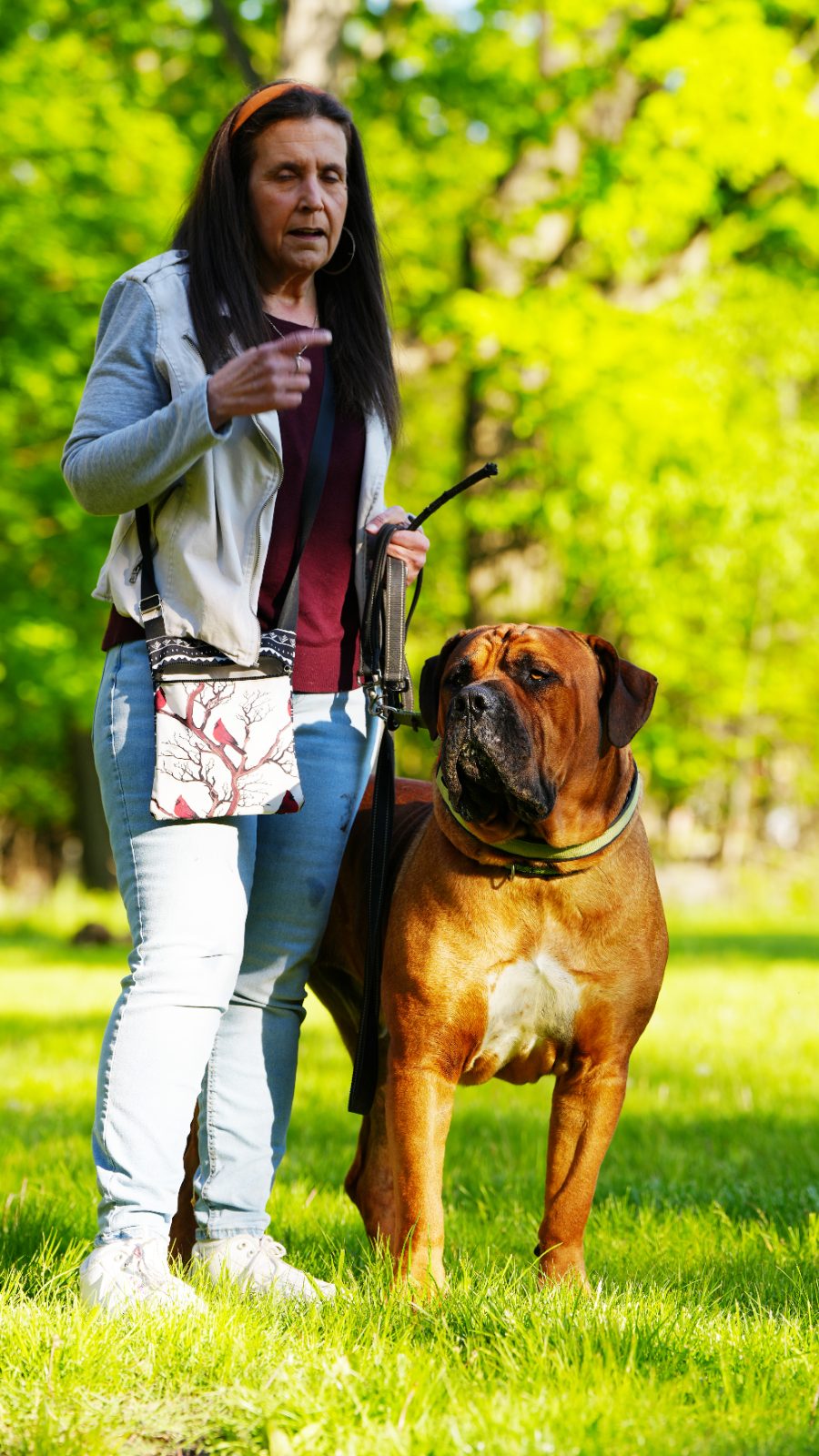
Get it right
from day one
We raise serious dog people, not just sell puppies. If you want honest guidance on starting or improving your Boerboel program — or on bringing your first one home — let’s talk.