
Boerboel Temperament
& drive
What this breed is really made of — and why most people get it wrong. Field notes from 20 years inside the Boerboel.
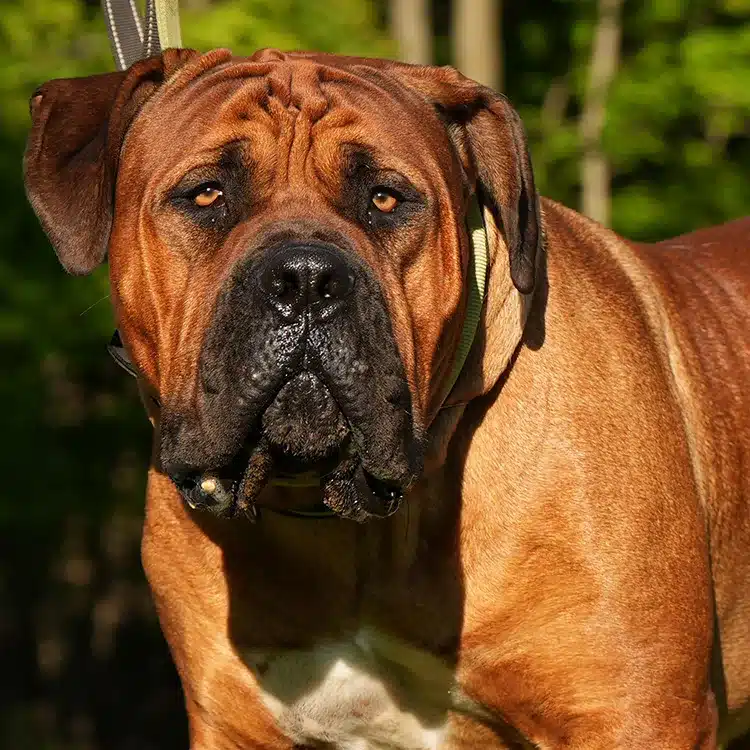
If you want to understand the Boerboel, you have to throw out almost everything you think you know about large protection breeds. This dog doesn’t operate the way a German Shepherd operates. Doesn’t think like a Malinois. Doesn’t function like a Rottweiler. The Boerboel has its own blueprint — its own way of moving through the world — and if you don’t understand that blueprint, you’ll misread this dog every single time.
We’ve been studying this breed since 2006 — not just breeding them, studying them. Watching how they communicate, how they respond to leadership, to environment, to reward. What we’ve learned could fill a book. What follows is the summary version. Read every word.
Section 01A team player, not a one-man army
He doesn’t need to be the quarterback
Here’s the single most important thing to understand about Boerboel temperament: this dog is a team player. He thrives in a working role. He wants a job. He wants to contribute. But he doesn’t need to be in charge — and he actually works better when he’s not.
The Boerboel is a pack animal, built by centuries of working alongside other dogs and people. He operates in tandems. Historically, on vast and remote South African farms, different dogs filled different roles — some larger, slower, and more powerful; some smaller, faster, and more agile. Each had a role. Each contributed. Each trusted the pack to function as a unit.
That instinct hasn’t gone anywhere. The modern Boerboel still wants to know where he stands in the structure, and still wants someone at the top making the calls. Give him that, and you have one of the most loyal, stable, capable dogs on the planet. Take it away, and you have a problem.
Section 02Size, balance & purpose
Two ends of the spectrum — and why the middle is the goal
Within the breed you’ll see a wide spectrum of physical types — and that physical type corresponds directly to temperament and working capability. It’s not a coincidence. Nature is deliberate.
On one end: the larger, heavier dogs. More mass, more bone, more raw power. They move with authority — slower, more deliberate, more settled and confident, less reactive. They are walls: immovable, intimidating without effort. On the other end: the smaller, more athletic dogs. Faster, more agile, higher endurance — the ones covering distance and running the perimeter while the bigger dogs hold the line.
In their original working environment, on a large South African farm with threats coming from every direction, both types had a role. The big dogs held down the territory. The faster dogs ran the perimeter. Neither was wrong. Both were necessary.
Balance ★
Athletic · Speed
Runs the perimeter. Fast, agile, high-endurance.
We breed toward the middle — substantial and powerful, but still able to breathe, run, and do the job. Sacrifice function for size and you don’t have a Boerboel; you have a statue.
Why we breed toward balance — not extremes
Here’s where the modern Boerboel world is making a serious mistake, and we’ll say it plainly: bigger is not always better. In the Western world — particularly in America — there’s an appetite for the largest dog possible. We equate size with value, with power, with status. And that appetite is pushing breeders past what’s functional, healthy, or what the breed was designed to support.
We breed toward the most complete Boerboel — physically substantial and visually powerful, but still able to function the way the breed was meant to. A dog that can breathe, can run, can do the job. A huge part of why we fell in love with this dog is its athletic ability; it moves like something that has no business moving that smoothly for its size. We won’t breed that out for a number on a scale.
The larger dogs tend to start to have less functional capabilities. So it’s a compromise. The key with the Boerboel — same as everything else in this breed — is balance.
Section 03What actually drives a Boerboel
Drive is a spectrum — know where your dog lives
Drive is not a single thing. It’s a collection of instincts — prey, play, defensive, food, social — and every dog carries a different combination and intensity of each. Yes, you’ll occasionally meet a Boerboel with strong prey drive, locked onto movement, ball-obsessed, with a predator instinct close to the surface. Those dogs exist. But they are the exception, not the rule. Buy one expecting that and you’ll be surprised — and probably disappointed.
The large majority of Boerboels are not highly driven in terms of prey or play. They don’t have the ball obsession of a Border Collie or the prey intensity of a Malinois. They aren’t wired to chase everything that moves — that’s not what this breed was built for, and not what South African farmers needed when they developed this dog over centuries.
What the Boerboel does have: powerful defensive drive
What the Boerboel carries deeply and consistently, across the vast majority of the breed, is defensive drive — the instinct to protect, to guard, to stand between their people and anything that threatens them. This isn’t aggression, it isn’t random, and it isn’t a hair-trigger reaction. It’s specific and purposeful:
This is fundamentally different from a prey-driven hunting dog or high-energy herding dog repurposed for protection. The Boerboel isn’t simulating protection — he’s a protection animal, built from the inside out. The defensive drive isn’t trained into him; it’s already there. Your job is to understand it, shape it, and channel it correctly.
Drive is not fixed — environment shapes everything
Here’s the part most people miss: the drive you see in your Boerboel is not set in stone at birth. The environment shapes the dog. What you reward shapes the dog. Understanding that is the difference between a well-adjusted Boerboel and a liability.
Section 04Environment & leadership
The behavior you reward is the behavior you’ll get
This is one of the most important principles in dog ownership — and one of the most consistently misunderstood. The behavior you reward is the behavior you’re going to get, every single time. The problem is that most people don’t realize when they’re rewarding a behavior. You don’t have to give a treat or say “good boy.” Sometimes all it takes is your attention — your eye contact, your energy shifting toward the dog, your body language reacting to what he just did.
For a dog, attention is currency. If your attention spikes every time he barks at the window, gets protective over food, or pushes through a door, you just paid him for it — even if you were trying to correct him. If he read your reaction as attention, he counted it as a win.
This is why clear communication is paramount with a breed this intelligent and observant. You’re communicating constantly, whether you mean to or not — through body language, energy, timing, and what you choose to ignore. When you don’t understand the message you’re sending, things get lost in translation. And with a dog this capable, lost in translation has real consequences.
The non-negotiable: leadership
The Boerboel is wired for structure. If you don’t establish yourself at the top of the hierarchy, he will. That’s not a threat — it’s just how this dog works. In the absence of leadership, he’ll step into the vacuum, start making decisions, start setting the rules, and resist when you ask him to stand down — because in his mind, he’s running the show.
When you tell the dog to stand down, that is the behavior you should expect. The dog should not take charge when you tell it to stand down. That is what happens in the absence of leadership.
This isn’t a flaw in the Boerboel — it’s the breed operating exactly as nature designed it. A pack without a leader is chaos, and the most capable member fills the role because someone has to. The Boerboel is doing what he was built to do. The question is whether you are doing what you need to do.
What real leadership looks like
Leadership is not domination, force, or intimidation. The kind a Boerboel respects is built on three things:
Lead this way and the Boerboel relaxes. He doesn’t have to carry the weight of running the household or making the calls. He settles into the role he was born for — and becomes the most loyal, stable, protective companion you’ve ever had. That’s not a small thing. That’s everything.
Section 05Know what you’re getting into
The Boerboel is not for everyone. He requires a committed owner — one willing to study the dog, understand the communication, provide real leadership, and meet the breed’s physical and psychological needs. Shortcuts don’t work with this animal. Half-measures don’t work with this animal.
But for the owner willing to put in the work, there’s no better dog on the planet. The loyalty is unmatched. The protection is real. The bond you build with a properly led Boerboel is one of the most remarkable things you’ll experience as a dog owner. We’ve been doing this since 2006 — breeding Boerboels exclusively, studying them, living with them, and raising serious dog people who know what they’re taking on before they ever bring a puppy home. If you’re ready to have that conversation, so are we.
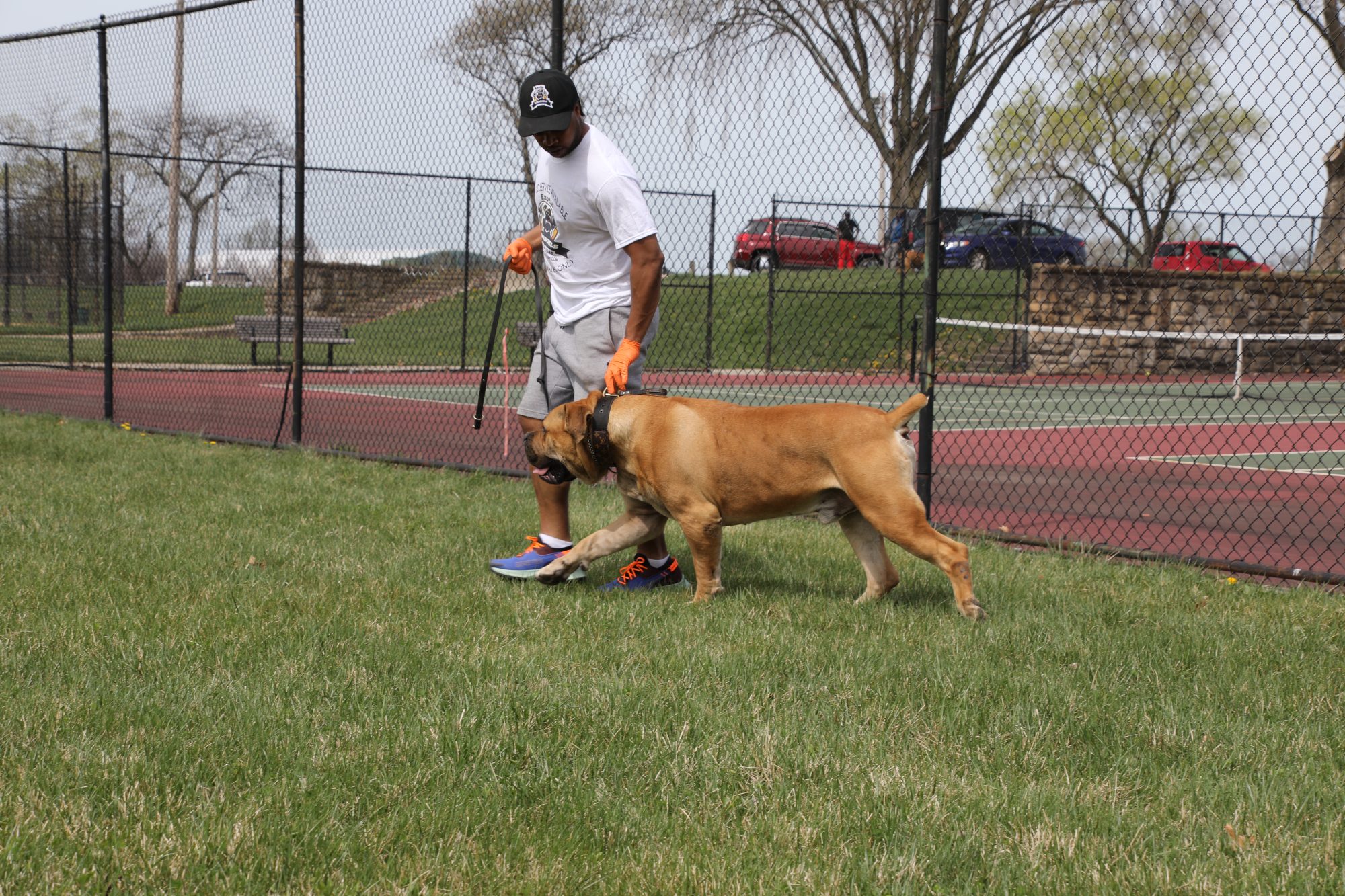
Not for everyone.
Everything for the right owner.
The Boerboel rewards the owner who studies the dog, leads with clarity, and meets the breed where it lives. If that’s you, let’s have the conversation — before you ever bring a puppy home.