The complete, no-shortcuts guide to building a balanced Boerboel — from the first week home to a fully conditioned adult. Leadership, exercise, structure, and the program we run with our own dogs.
JP
Jordan Pittman
Founder · Exotic Boerboels
14 min read Apr 2026
A Boerboel is not a dog you train into shape with a weekend course. He’s a dog you raise — through consistent leadership, daily structure, and real physical work. Get those three right and obedience almost takes care of itself. Get them wrong and no amount of commands will save you.
This is the framework we use with our own dogs, refined over 20 years of breeding and living with the breed. It’s evergreen on purpose: the dog hasn’t changed, and neither have the fundamentals. Bookmark it, work it, come back to it.
The order of operationsExercise first, training second, affection third
Most owners reverse this. They lead with affection, dabble in training, and skip the exercise — then wonder why the dog is restless, pushy, or reactive. The Boerboel needs the order flipped.
The hierarchy of a balanced dog
Exercise first — a physically satisfied dog is a psychologically stable dog. Drain the body and the mind follows.
Training second — structure, rules, and clear expectations — taught calmly and repeated daily.
Affection third — earned, well-timed, and given for the behavior you want to see more of.
Key takeaway — Dogs need a job. They need movement, structure, and mental challenge — in that order. A physically engaged Boerboel is a psychologically stable one.
The foundationLeadership before obedience
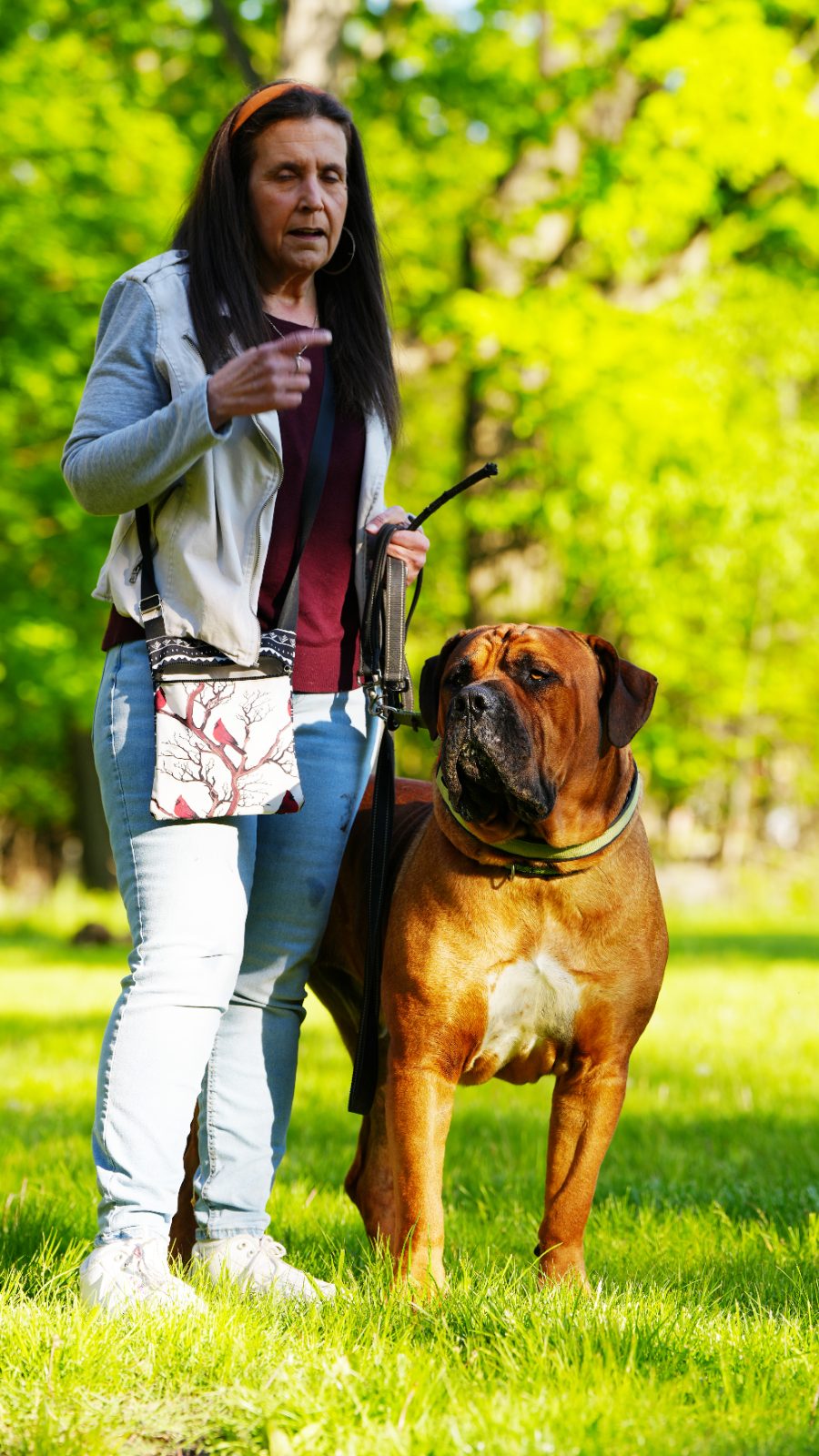
Before a single command, the Boerboel needs to know who’s leading. He’s a pack animal wired for hierarchy — if you don’t fill the leadership role, he will. Real leadership isn’t domination or force; it’s clarity, consistency, and calm authority.
Clarity means the rules are known and apply all the time. Consistency means they don’t change with your mood. Calm authority means you set the tone instead of matching his energy. Lead this way and the dog relaxes — he no longer has to run the household, so he can settle into the role he was born for.
Leadership isn’t something you do at the dog. It’s something the dog feels in how steadily and predictably you move through the world.
Jordan Pittman · Exotic Boerboels
Put it on a calendarA weekly conditioning template
Conditioning is consistency, not intensity. You don’t need to crush your dog — you need to move him, daily, with a mix of structured walks, real cardio, and mental work. Here’s a balanced week for a healthy adult (scale down for puppies and seniors):
MON
Structured walk + obedience
TUE
Bike conditioning
WED
Walk + scent / mental work
THU
Bike or hill work
FRI
Walk + drills
SAT
Long session / pack walk
SUN
Rest / light walk
Gold = hard cardio · champagne = moderate · gray = rest. Always warm up, watch the heat (this is a heavy, dark-coated breed), and never hard-condition a dog whose growth plates are still open.
Stage by stageTraining by age
1
8–16 weeks · Foundation
Socialization is everything. Calm exposure to people, surfaces, sounds, and handling. Introduce a name, a crate, a routine, and gentle leash work. No hard exercise — short play and lots of rest. This is where the Super Puppy work pays off.
2
4–12 months · Structure
Adolescence — the testing phase. Hold your rules firm and consistent. Build engagement, recall, place/stay, and loose-leash walking. Begin light conditioning as joints mature. Expect boundary-pushing; answer it with calm consistency, not escalation.
3
12–24 months · Conditioning
The body is ready for real work. Add bike conditioning, hill work, and longer sessions. Sharpen obedience under distraction. This is when a well-led Boerboel becomes the steady, powerful adult you’ve been building toward.
4
2 years+ · Maintenance
Keep the engine running. Consistent exercise, ongoing structure, and lifelong reinforcement of the rules. A conditioned, well-led adult is calm, confident, and a genuine pleasure to live with.
Our signature methodThe bike-conditioning program
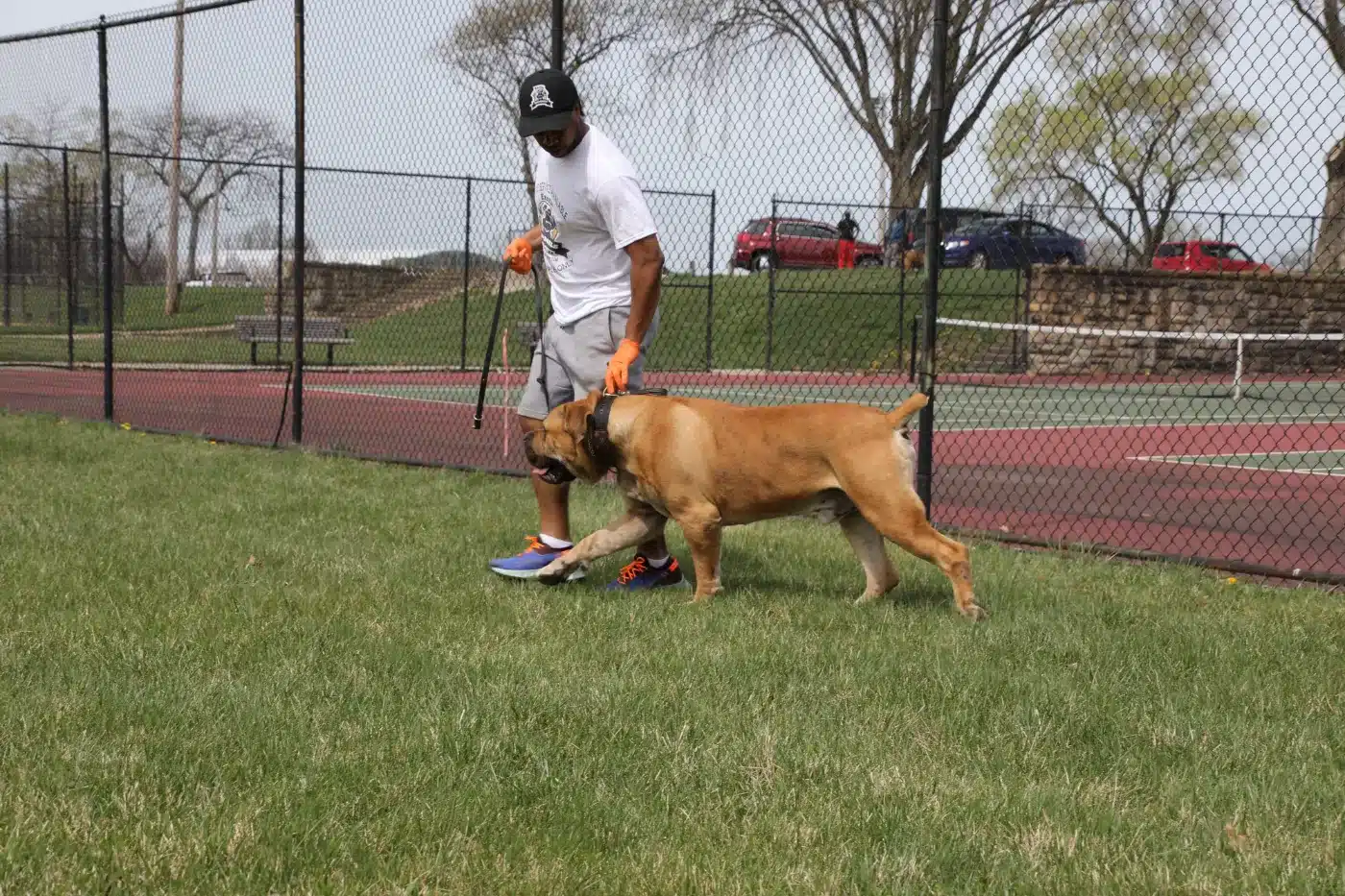
Jordan personally runs a bike-conditioning program with our dogs — not for show, but because a physically engaged Boerboel is a psychologically stable one. Controlled roadwork alongside a bike builds cardiovascular fitness, lean muscle, and a settled mind in a way a backyard never can.
Controlled conditioning builds the athletic, balanced frame this breed is meant to carry.
Condition safely
Wait for maturity — no roadwork until growth plates close (usually 14–18 months). Ask your vet.
Build gradually — start with short, slow sessions and add distance over weeks, not days.
Mind the heat & pavement — early mornings, cool surfaces, water breaks. Heavy dark coats overheat fast.
Watch the dog — conditioning should leave him satisfied, not wrecked. Recovery matters.
How we develop driveThe three schools
We develop protective capability through three structured schools — never by making a dog “mean.” The goal is a discerning, stable guardian that’s complete and balanced, not a hair-trigger liability.
Defender
Protecting the pack and the people. Calm presence, clear thresholds, and trust in the handler’s lead.
Deflector
Reading and de-escalating. A confident dog that controls space without ever needing to escalate.
Deterrent
Presence as prevention. The look, the size, the steadiness — most situations end before they begin.
All three schools agree on one principle: exercise first, training second, affection third. A complete protector is built on a balanced, conditioned, well-led dog — never the other way around.
Stay out of the ditchWhat to avoid
The fastest ways to undo your work
Skipping exercise — an under-worked Boerboel invents his own jobs — usually ones you won’t like.
Inconsistent rules — rules that change with your mood teach the dog the rules don’t matter.
Rewarding the wrong moment — attention is currency. Reacting to barking, guarding, or pushiness pays for it.
Leading with affection — unearned, untimed affection tells a guardian breed it runs the show.
Over-conditioning a pup — hard work on immature joints causes lasting damage. Patience first.
Quick answersTraining FAQ
A healthy adult needs daily structured movement — typically 45–90 minutes combining walks, real cardio (like bike conditioning), and mental work. Puppies need far less hard exercise and far more rest, play, and socialization.
Not until the growth plates close, usually around 14–18 months. Before that, focus on socialization, structure, and light, controlled activity. Ask your vet for your individual dog.
They’re intelligent and trainable, but they need leadership more than commands. A consistent, calm owner gets a wonderful dog. An inconsistent one gets a dog that makes its own decisions.
No. The Boerboel’s defensive drive is innate. For the vast majority of owners, the priority is a stable, well-socialized, well-led companion — not bite work. Presence alone is deterrent enough.
Stop funding it. Big reactions are rewards. Stay neutral to the behavior you don’t want, reward the calm you do want, and make sure the dog is physically and mentally exercised in the first place.
No. A yard is space, not stimulation or leadership. Dogs left to “self-exercise” rarely do. Structured activity with you is what builds a balanced dog.
🐾 Start strong
Raise the dog right, from week one
Every Exotic Boerboel goes home with a head start — early neurological stimulation, socialization, and a lifetime of support from Jordan. Ready to begin? Let’s talk.
Get First Access to the Next Exotic Boerboels Litter
Elite South African Boerboel puppies sell out fast — most before they're ever posted. Join the priority waitlist and Jordan Pittman will personally reach out before anyone else knows.
🔒 No spam. No fluff. Championship bloodlines. Cleveland, Ohio.
🐾
You're on the List!
Jordan will reach out personally when the next litter drops — before it ever goes public. Watch your inbox.
🐾
Elite South African Boerboel Puppies — Reserve Yours Today